
Chosen Every Day: Ingrid-Rose Chitombi on Faith, Love and Breaking Inherited Prejudice
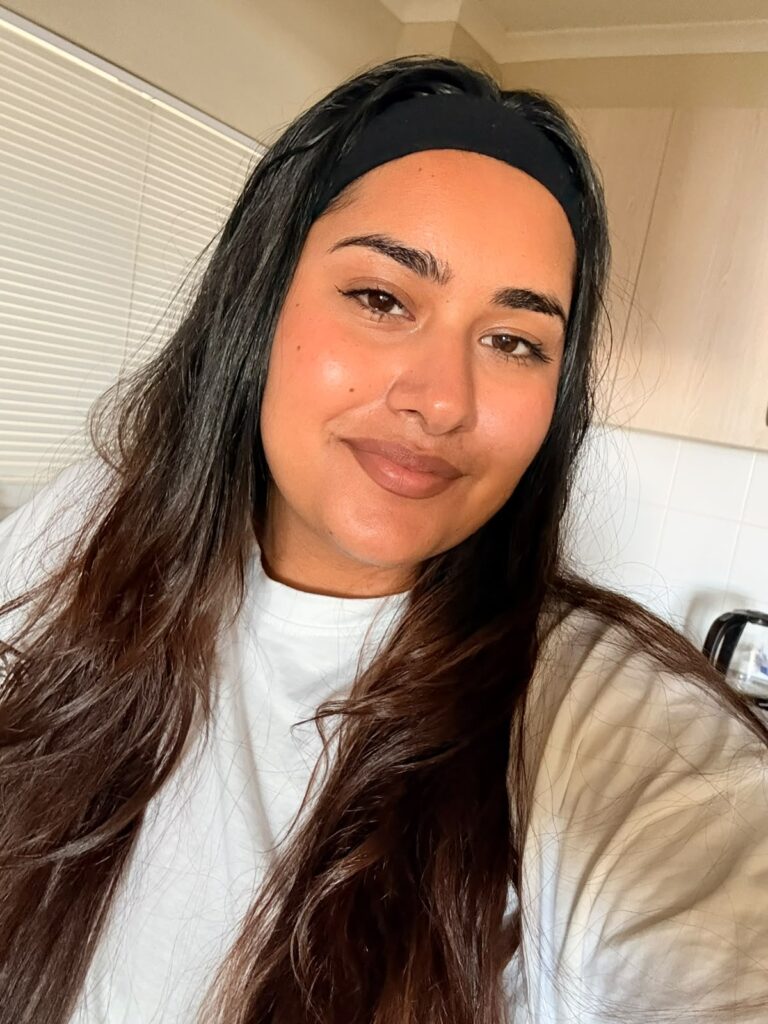
Her story is not only one of love, marriage and visibility; it is also a story of faith, healing, identity and the quiet courage it takes to break inherited patterns.
Ingrid-Rose Chitombi is known to many as one half of The Chitombis, the woman beside Daniel Chitombi in the videos, stories and glimpses of family life that have made their platform feel familiar to so many people. But beyond what people see on social media, Ingrid-Rose describes herself first as a wife, a mother, and a woman still gently unlearning much of what she was taught as a child.
“I love Jesus,” she says, because for her, everything good in her life began after she gave her life to Christ. Together with her husband, Daniel, she runs a content and marketing agency, but her identity reaches far beyond business and public recognition. She is sensitive, forgiving, and, in her own words, unable to hold hatred in her heart for anyone. That softness, she is clear, was not something she was born with. It is something God did in her.
Ingrid-Rose grew up in Chatsworth from the age of five until around seventeen. She speaks about that part of her life honestly, not to expose anyone, but because she believes honesty may help someone else feel less alone. Her home, she says, was not stable. It was a toxic environment marked by misery, irritation, divorce, cheating, and emotional unrest.
Looking back, she says there were no values deliberately instilled in her. The lessons that shaped her most deeply were ones she collected along the way, often from people outside her home who showed her a healthier way to live. Nobody taught her, as a young girl, how to respect herself or her body. At one point, someone close to her even told her she should “test the waters” before marriage so she would know what she was getting into. For her, that advice reflected the standard she had been handed as a child.
She was exposed to things a child should never have had to carry. So, when she speaks about values today, she says she collected them rather than inherited them. By the time she met Daniel, she had begun to understand what it meant to be a woman, to respect herself and to stand up for herself. She had learned those lessons from scratch.
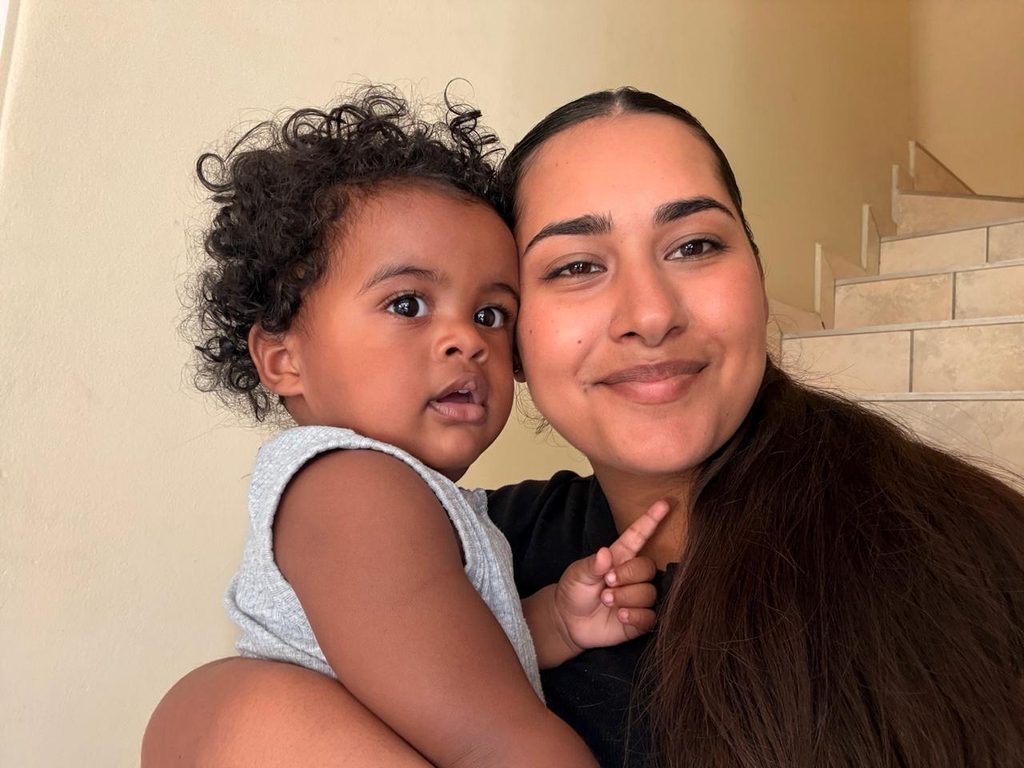
Her heritage has always been layered. Ingrid-Rose is Indian on her father’s side and Afrikaans on her mother’s side. Later, through marriage, she became part of a Zimbabwean Shona family. Today, her child carries all of those histories at once. To her, that is something deeply South African.
For her, heritage is not only about where a person comes from, but about what they choose to do with what they inherit. South Africa, she believes, has taught people to live beside one another. But her generation is being asked to do something more difficult: to love one another, marry one another, raise children together, and build families that would once have been rejected by law and society. She does not take lightly the fact that her family exists in a country where, not so long ago, a marriage like hers would have been illegal. To her, being South African means becoming proof that change is possible.
She met Daniel through a mutual friend named Pixie, who remains their best friend to this day. Her parents were away at the time, and Pixie was visiting when she asked if she could bring him over. When he walked through the front door, she immediately noticed his big smile, almost a smirk, and remembered thinking that he was a handsome man.
What drew her in was not only his appearance, but his humour. From the beginning, Daniel was full of jokes, always laughing, and always ready with his phone to capture videos of everything around him. Years later, she says with affection, that part of him has not changed at all. He is still the one with the camera out.
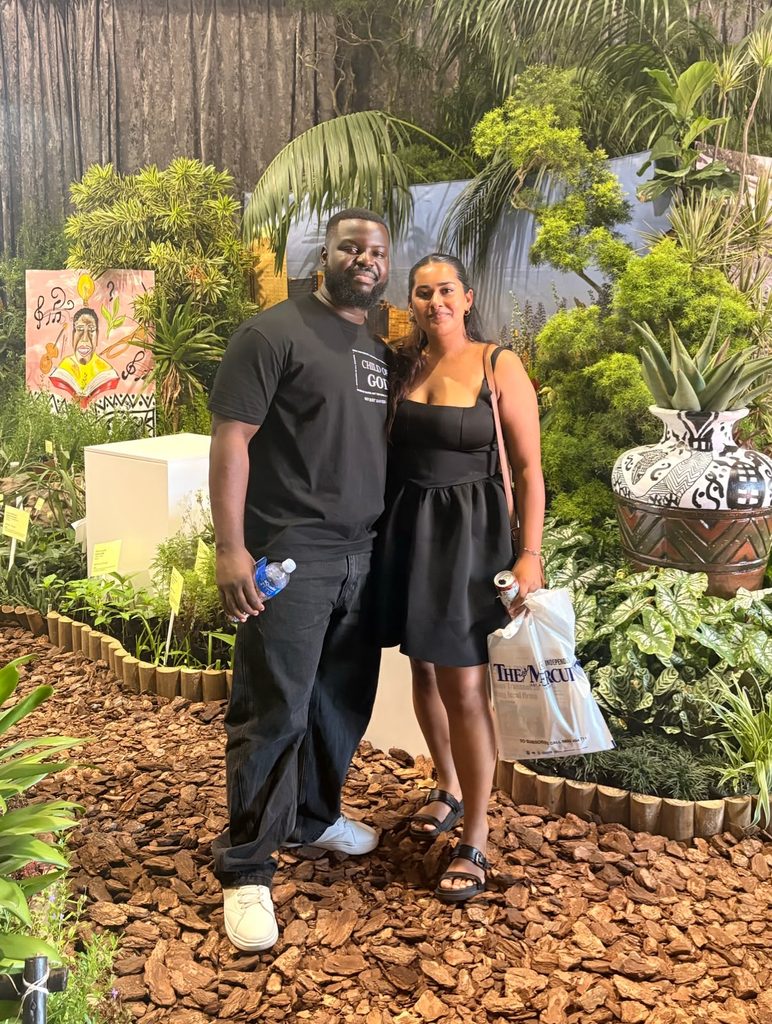
The moment she realised love would not be easy was the moment she accepted that she was attracted to a Black man. She had grown up in a town where racism towards Black people was normalised, and where foreign men were surrounded by cruel assumptions. People assumed that if they had money, there had to be something suspicious behind it. Even Black South African men were not spared those stereotypes. Their success was rarely allowed to be understood as a result of hard work.
Then someone in her family told her they would rather she be gay than be with a Black person. The pain of that statement was sharpened by the fact that it came from someone who had worked hard to present the home as Christian. For her, that was the moment she understood that the greatest obstacle to her relationship would not first be the outside world. It would be the people at her own table.
At first, she admits, she navigated the racism badly and slowly. She was defensive and in denial because it was difficult to accept that people she loved could treat her partner that way. Over time, however, she reached a point where she told them plainly that they either accepted Daniel or lost access to her. She eventually cut certain family members off, a decision she describes as the hardest of her life. But her husband, she says, was never going to be the thing she apologised for.
As The Chitombis, Ingrid-Rose and Daniel share their life openly because they remember what it felt like to search for a story like theirs and not find one. When they were going through the worst of it, she says they could not find anyone who looked like them saying the hard parts out loud. People showed the wedding photographs and the cute couple’s content, but not the family that refused to come to the wedding.
So, they decided that if they were going to build something online, it would be the honest version. Their openness is not performance. It is, as Ingrid-Rose describes it, a trail left for someone else to follow: a young woman somewhere being told the same painful things she was told, who needs to see that a marriage can survive it and still be happy on the other side.
Their journey has also taught her about privilege, unlearning, and love. She believes most people carry beliefs they never actively chose. She did not sit down one day and decide to believe harmful things about Black people or foreign people; those beliefs were simply in the air of the house she grew up in, and she breathed them in as a child. Recognizing that, she says, was the beginning of everything.
Privilege, for her, is being able to walk into a room and never wonder what people are assuming about how you got what you have. She watched Daniel enter rooms where that assumption arrived before he did. Once she saw that happening to someone she loved, she could no longer unsee it anywhere else. Love made her ask harder questions about the people she came from than she had ever wanted to ask.
The most painful part of watching him experience racism was knowing that he had already carried so much of it before her. He had experienced racism at school and at work. By the time he came into her life, she felt she was supposed to be his safe place, the one space where none of that could reach him.
Instead, her family was not a safe place for him either. There was always something holding them back from loving him fully in the way she had imagined they would. Watching the man she loved walk into her family home and not receive what he deserved broke something in her that took a long time to mend.
And yet, the most beautiful confirmation that she had made the right choice came from his calmness. He never fought with her about it and never demanded that she choose him over her family. He saw how much she loved them and how deep her denial ran, and he waited quietly for her to arrive at the truth on her own.
When she finally did, he was not angry. He was gentle. To her, a man who has every right to be furious and chooses patience instead is a man worth keeping.
Faith is the foundation of their marriage. Ingrid-Rose says they pray over their relationship first, and everything else sits on top of that. They are also careful about who they allow close to them. They do not spend time with people who continuously cheat, or with couples who degrade and disrespect one another openly. They are not anyone’s judges, she says, but that kind of company can quietly take a toll over time.
They have learned to talk about things while they are still small. Every marriage has seasons where comfort can make people forget that love still needs maintenance, so they try to sit down, speak plainly about what hurts, and apologize properly. One of the biggest lessons he has taught her is the importance of acknowledgement. To him, being acknowledged is not about praise. It is about not being ignored. That lesson changed how she loves people.
For young women in South Africa who are afraid to love outside their culture or race because of family pressure, Ingrid-Rose speaks from experience. She understands the instinct to defend the family first, because she was once in that place by herself. Denial, she says, can feel natural when it is almost impossible to imagine that people you love could treat your partner unfairly.
But she urges women not to take as long as she did. While someone is busy defending their family and convincing themselves that the situation is not that bad, their partner may be the one absorbing the pain. That, she says, is not fair to the person who chose them.
Her advice is simple but hard-earned: love the person, listen carefully to what is being said about them, and understand that setting a boundary with family is not the same as hating family. She still loves hers. She simply stopped allowing Daniel to pay the price for their comfort.
Today, being a modern South African woman means she gets to build something rather than only survive something. She is running a business with her husband and raising her child, both of which were not part of the picture she was handed as a girl.
It also means being the one who breaks the pattern. She believes many women are the first in their family line to choose repair instead of walking away the moment things become difficult. It is quiet work, often without applause, but to Ingrid-Rose, it is one of the most modern things a South African woman can do.
After everything she has lived through, she defines love as peace. Love is calm. It is him letting her sleep late. It is him being gentle with her while she works through the harmful things she picked up and never making her feel ashamed that she is still healing.
She has heard people say a woman should find a man who loves her more, as if that is the secret to marriage. For her, it is not that she loves Daniel any less. It is that he loves her through the parts of herself she struggles to love. He chooses her on the days she might not have chosen herself.
Most of all, love means being chosen and acknowledged. Growing up, she says, she was never a priority. Others chose their relationships and their own enjoyment, while loving her and being present for her came afterwards. Now, love is found in the smallest moments: someone sitting beside her, hearing her say, “Look, there is a bird,” and actually looking. To her, that attention is not small at all. It is the whole thing.
For the youth of South Africa, Ingrid-Rose’s message is to question where their opinions really came from. She believes many beliefs about other races are handed down quietly, sometimes in kitchens and family conversations, by people young people trust. Many never examine those ideas for themselves. She knows this because it was once her own story.
She wants young people to know that they are allowed to love the people their families taught them to fear. They are allowed to be the generation that stops repeating inherited prejudice. But she also warns against bitterness, because bitterness can become the next thing that passes down. She hopes that young people will forgive them, then choose to do things differently
If Ingrid-Rose had to complete the sentence of her life, she would say that her story is one of coming out of a home with no values and no peace, giving her life to Christ, and receiving the marriage and family she used to pray for in secret. Hers is the story of a girl who was never chosen, now being chosen every single day.
To every woman reading her story, she wants to say that where you come from is not a sentence you have to serve.
She remembers living a life she found deeply embarrassing, and she admits there are still things about her past that keep her up at night. But when she gave her life to Christ, she found forgiveness, and that forgiveness allows her to speak openly about her mistakes. Nobody can use her past against her, she says, because that woman existed before she found Jesus. She is not her anymore. She is calmer now, more understanding, far less angry, and able to love people to her full capacity.
For the woman who was never made a priority, her encouragement is to hold the standard anyway. Daniel is the man she asked God for, and at one time she almost did not believe he existed. Before him, she never even wanted children, but within their first year of dating, she knew she wanted to marry him and build a family with him. Her final reminder is that God is not finished. He was not finished with her.